
Agentic Project Management for an AI Agent Organization
A small stack of proven systems: OKRs, OODA, Kanban, Theory of Constraints, and Musk’s engineering algorithm, adapted to run autonomous AI driven companies.
Updated 3 min read


A small stack of proven systems: OKRs, OODA, Kanban, Theory of Constraints, and Musk’s engineering algorithm, adapted to run autonomous AI driven companies.
Most management systems were designed for humans.
But if you want to run an organization powered by AI agents, you need something simpler. A small set of mental models that guide goals, decisions, execution, and improvement.
Looking across decades of proven management systems, from Toyota manufacturing to modern tech companies, a consistent pattern appears.
The most effective approach is not a single framework. It is a minimal stack of complementary systems.
Use Objectives and Key Results to define what the organization should achieve.
OKRs provide:
The framework was popularized at Intel by Andy Grove and later adopted by companies like Google.
Example:
Objective: Improve customer support automation
Key Results:
- Resolve 80 percent of support tickets autonomously
- Reduce response time from 5 minutes to 30 seconds
- Increase CSAT from 82 percent to 92 percent
In an AI driven organization, agents operate to move these metrics.
Agents need a fast decision cycle.
Use the OODA Loop created by military strategist John Boyd.
Observe → Orient → Decide → Act
Agents continuously:
This creates adaptive, real time organizations.
Startups often outperform large companies simply because they iterate this loop faster.
Once decisions are made, work needs a flow system.
Use Kanban, invented by Taiichi Ohno at Toyota as part of the Toyota Production System.
Core ideas:
Example pipeline:
Backlog → Ready → In Progress → Review → Done
Agents pull tasks when capacity becomes available. This prevents overload and stabilizes throughput.
Every system has a bottleneck.
Use the Theory of Constraints developed by Eliyahu Goldratt.
Principle:
The performance of a system is limited by its slowest constraint.
Typical steps:
For AI organizations, constraints are often:
Improving the constraint improves the entire organization.
Elon Musk often describes a simple engineering optimization process used inside Tesla and SpaceX.
Reference:
https://www.youtube.com/watch?v=Jgw-_hlFQk4
The steps:
The key idea:
If you are not adding things back after deleting them, you did not remove enough.
For AI systems this prevents automating broken processes.
OKRs → define goals
OODA → agent decision loop
Kanban → execution flow
Theory of Constraints → optimize throughput
Musk Algorithm → continuous simplification
Each model governs a different layer of the organization:
Layer | System |
|---|---|
Strategy | OKRs |
Decision making | OODA Loop |
Work execution | Kanban |
System optimization | Theory of Constraints |
Continuous improvement | Musk Engineering Algorithm |
Together they create a self optimizing organization.
These models come from very different domains:
Yet they converge around the same principle:
Strong systems outperform complicated tools.
AI agents can execute tasks, but organizations succeed when the system guiding them is simple, adaptive, and continuously improving.
This stack provides a minimal operating system for an autonomous AI driven company.
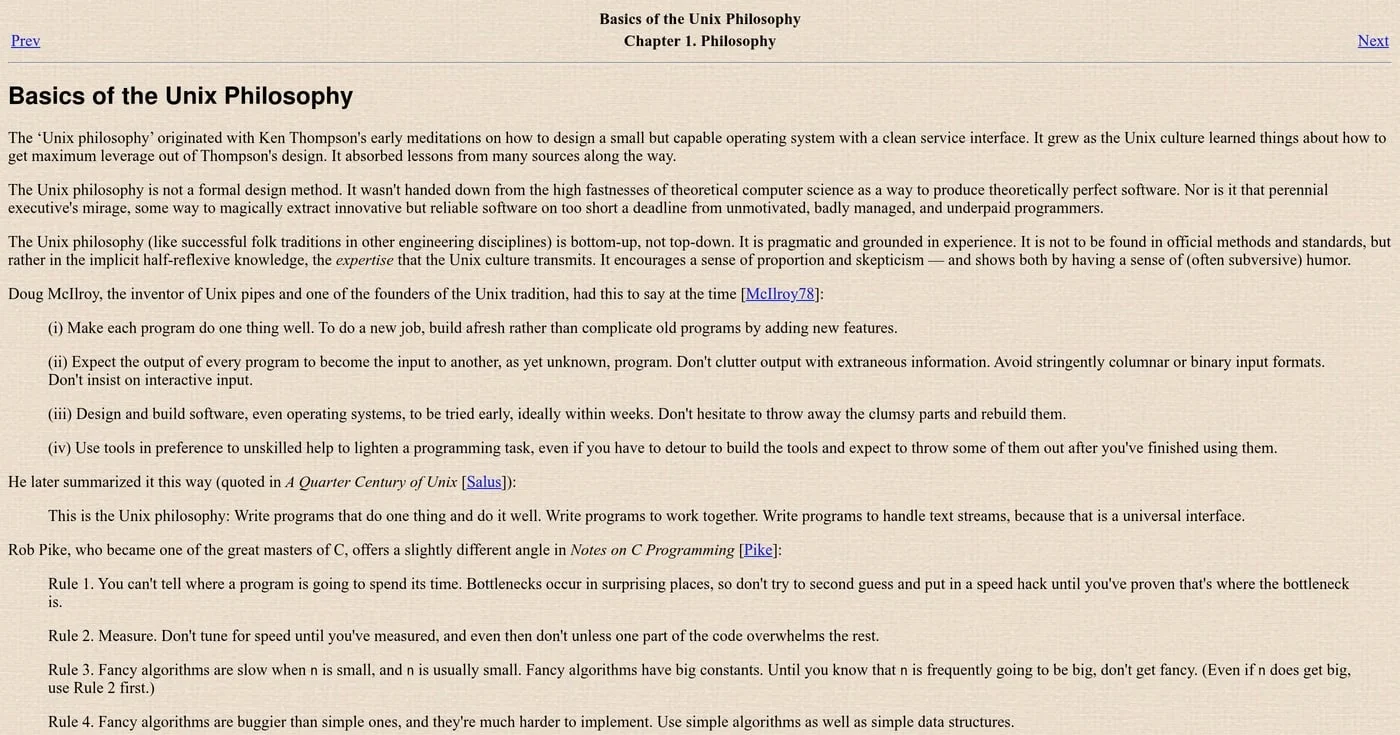
The Unix philosophy is four 1978 rules for small tools, not one slogan. Name the document you quote, then use those rules when you build with agents and tools.
Voluntary NIST AI 100-1 guidance (26 January 2023). Map GOVERN, MAP, MEASURE, and MANAGE to owners, evidence, and cadence.

Buyer and implementation guide for ChatGPT Enterprise: controls, SSO/SCIM, residency, HIPAA boundary, and a 12-step rollout.
