
14 AI App Builders Ranked by What You're Building
Compare 14 AI app builders by buyer type, real pricing, and production-readiness. Includes hidden costs, HIPAA picks, and tools rival listicles haven't listed y
Updated 18 min read

Compare 14 AI app builders by buyer type, real pricing, and production-readiness. Includes hidden costs, HIPAA picks, and tools rival listicles haven't listed y
The three standout AI app builders in 2026 are Base44 (acquired for $80M), Lovable ($6.6B valuation), and Zite (the only no-code builder with SOC 2 and RBAC on every plan). Base44 leads on build speed and lowest error rates in independent testing; Lovable is best for full-stack web MVPs with code export. Below, 14 builders ranked by what you're actually trying to ship.
The term "vibe coding" (coined by Andrej Karpathy in February 2025 to describe fully LLM-driven app building) went mainstream in 2026 and drove 7× year-over-year keyword growth for the category.
There's a new kind of coding I call "vibe coding", where you fully give in to the vibes, embrace exponentials, and forget that the code even exists. It's possible because the LLMs (e.g. Cursor Composer w Sonnet) are getting too good. Also I just talk to Composer with SuperWhisper
That growth has bifurcated the market into two categories that serve different buyers entirely: no-code prompt-to-app builders for non-engineers, and LLM development platforms for engineering teams. Mixing the two in one comparison list is how most people end up with the wrong tool.
No-Code / Prompt-to-App Builders (for non-engineers and founders):
LLM Development Platforms (for engineering teams):
Software | Best For | Key Features | Pricing | Free Plan | Platforms |
|---|---|---|---|---|---|
Speed + reliability | Full stack (frontend + backend + auth + hosting), no integrations | Yes (25 msg/mo) | Web | ||
Full-stack web MVPs | React + Supabase, GitHub export, parallel subagents | Yes (30 credits/mo) | Web | ||
Beginner-to-pro ramp | GitHub sync, design systems, Claude Code underneath | Yes (1M tokens/mo) | Web | ||
Platform flexibility | Browser IDE, open router models, App Store deploy | Yes (limited) | Web, iOS, Android | ||
Production internal tools | SOC 2 Type II, RBAC, audit logs, unlimited apps | Yes (50 AI credits) | Web | ||
Healthcare apps | HIPAA + SOC 2, AI phone numbers, automation templates | 7-day trial | Web | ||
Enterprise spreadsheet apps | Spreadsheet-to-app, AI, 100K+ companies | Yes (no publish) | Web, Mobile | ||
Complex business logic | Visual editor, Claude Sonnet 4.6, workload scaling | Yes | Web | ||
Mobile with code export | Flutter export, 200+ components, Firebase/Supabase | Yes (limited) | Web, iOS, Android | ||
B2B portals from data | Block system, Airtable/Sheets, 1M+ users | Yes (no publish) | Web | ||
Visual LLM builder | RAG + multi-model + agents, 90K+ GitHub stars | Yes (200 credits) | Web, Self-host | ||
LLM in automations | 300+ integrations, LLM nodes, webhook-driven | Self-host free | Web, Self-host | ||
Max programmatic control | 100+ integrations, LangGraph, LangSmith observability | Yes | Python, JS | ||
Quick LLM prototyping | Open-source, drag-drop, LangChain-native | Self-host free | Web, Self-host |
14 AI app builders compared at a glance
Best for non-technical founders who need speed and reliability
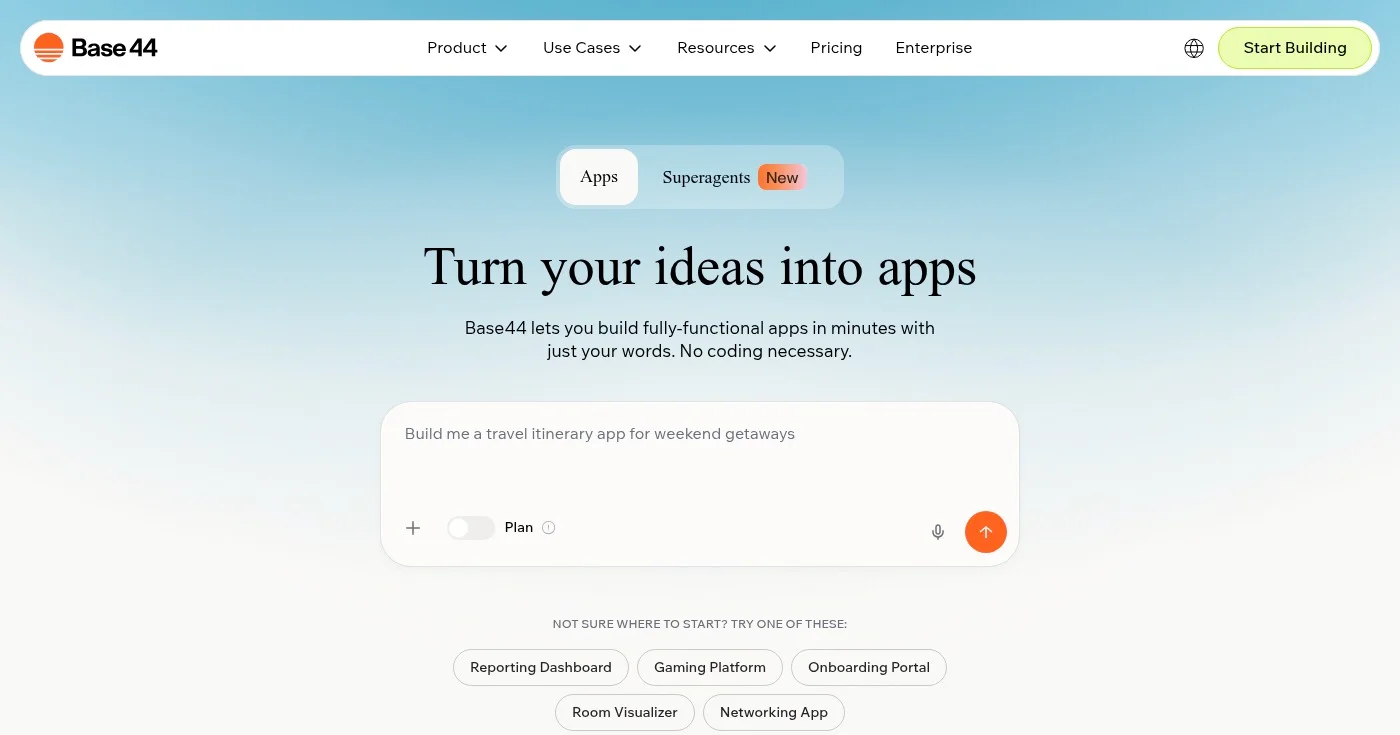
Base44 generates a complete frontend, backend, authentication, and hosting stack from a single chat session with no external integrations required. Wix acquired Base44 for $80M cash in June 2025, six months after founding. The product hit $100M ARR within nine months of acquisition.
In independent benchmarks by Mikey No Code, Base44 scored 91/100 across five categories. It built a to-do list in 1:30, the fastest of any platform tested, with the lowest error rate as project complexity grew. A student founder built Got2Eat, a NYC cheap-food map app, in hours with Base44; it reached 3,000+ users and 1,000 restaurants within days of launch.
The main limitation is lock-in. Code export is not straightforward, and apps live on Base44 infrastructure permanently.
Plans start at $16/month. No trial period beyond the free tier.
Best for full-stack web MVPs where code ownership matters
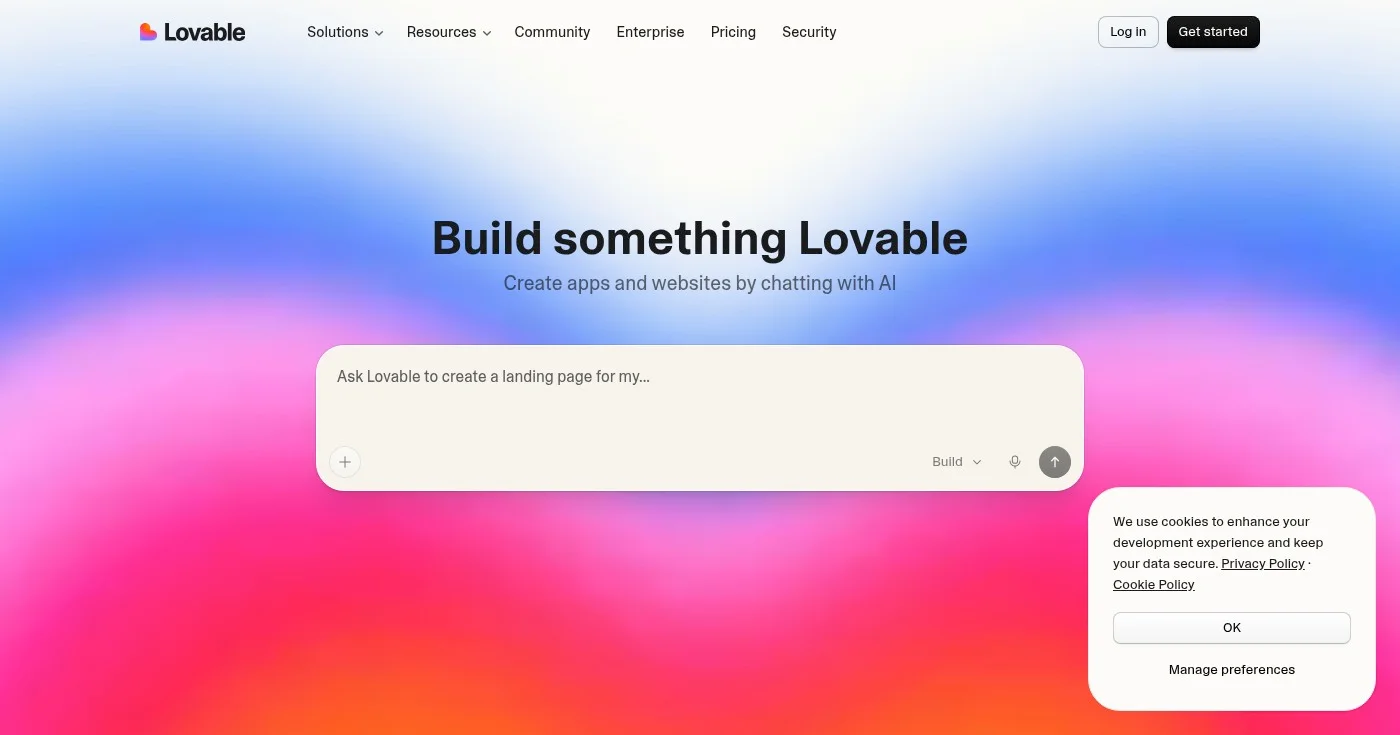
Lovable generates React + Supabase full-stack applications from chat prompts with GitHub code export, meaning you own the codebase if you ever need to leave the platform. The May 2026 subagents update lets background agents research your codebase, audit builds, and synthesize datasets in parallel while you build. The platform added $100M in revenue in a single month in March 2026 with just 146 employees.
Two disclosures before committing. First, Lovable's April 2026 security incident exposed public project source code and chat histories between February 3 and April 20, 2026. Second, the $25/month Pro sticker adds usage-based backend charges of $50–$200+ per month in practice, a cost structure no top-ranking competitor article explains.
Lovable is web-only with no model choice (locked to a proprietary model). Builders needing native mobile output need a different tool.
Verify expected backend usage against your workload before committing to the Pro plan.
Best for beginners who plan to graduate to professional tools
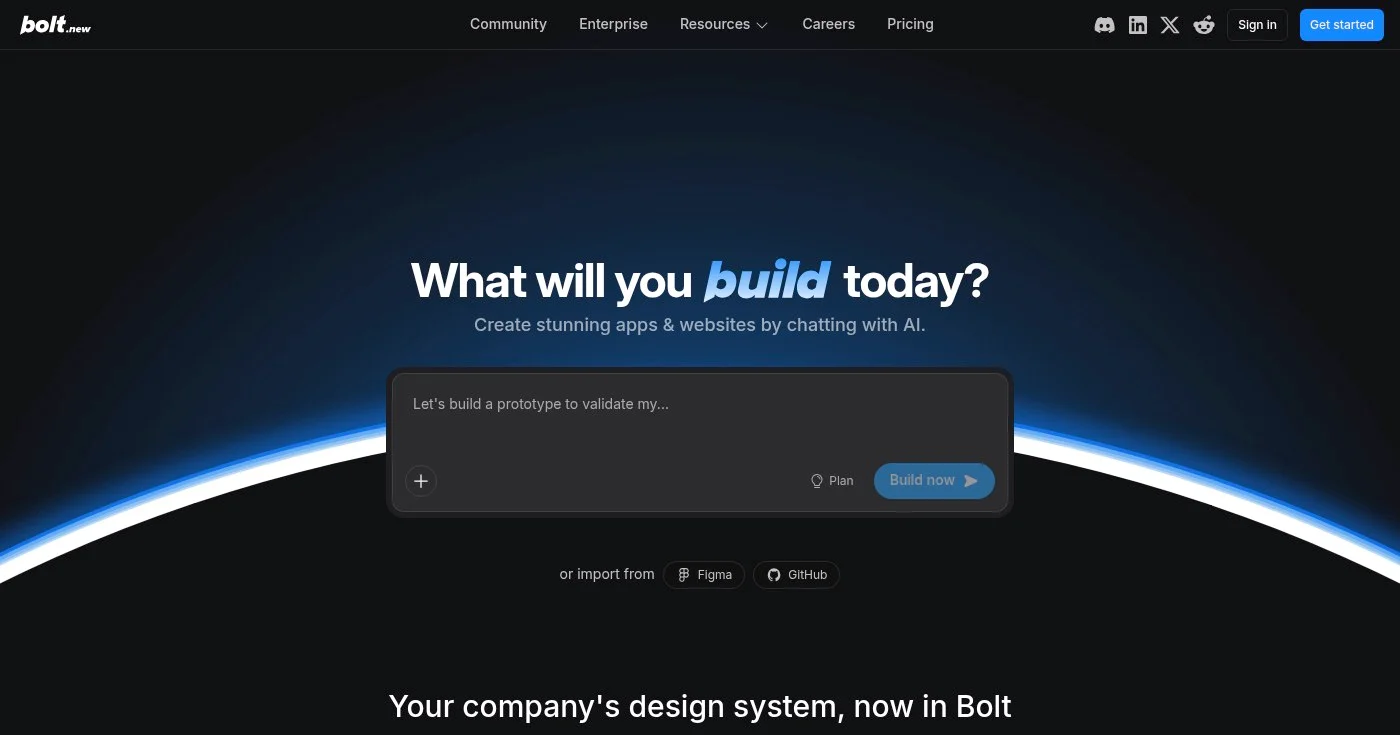
Bolt uses Claude Code under the hood, exposes GitHub sync with branch management, and integrates design systems (Shadcn, Material, Chakra) out of the box. The result: you build your first app in Bolt using the same mental model that applies when you move to Cursor or Claude Code directly. That skill transfer is what makes Bolt the preferred beginner entry point among the YouTube creator cohort covering AI app builders.
Token-based pricing is predictable for simple projects and unpredictable for complex ones. Chris from Build Great Products named the key lesson after benchmarking multiple platforms.
"Learning how to plan and learning how to prompt these tools correctly is a much more important thing to learn than to learn a specific individual tool."
The $25/month Pro plan includes 10M+ tokens.
Free tier covers serious prototyping. Token cost projection matters before upgrading.
Best for builders who need platform and model flexibility
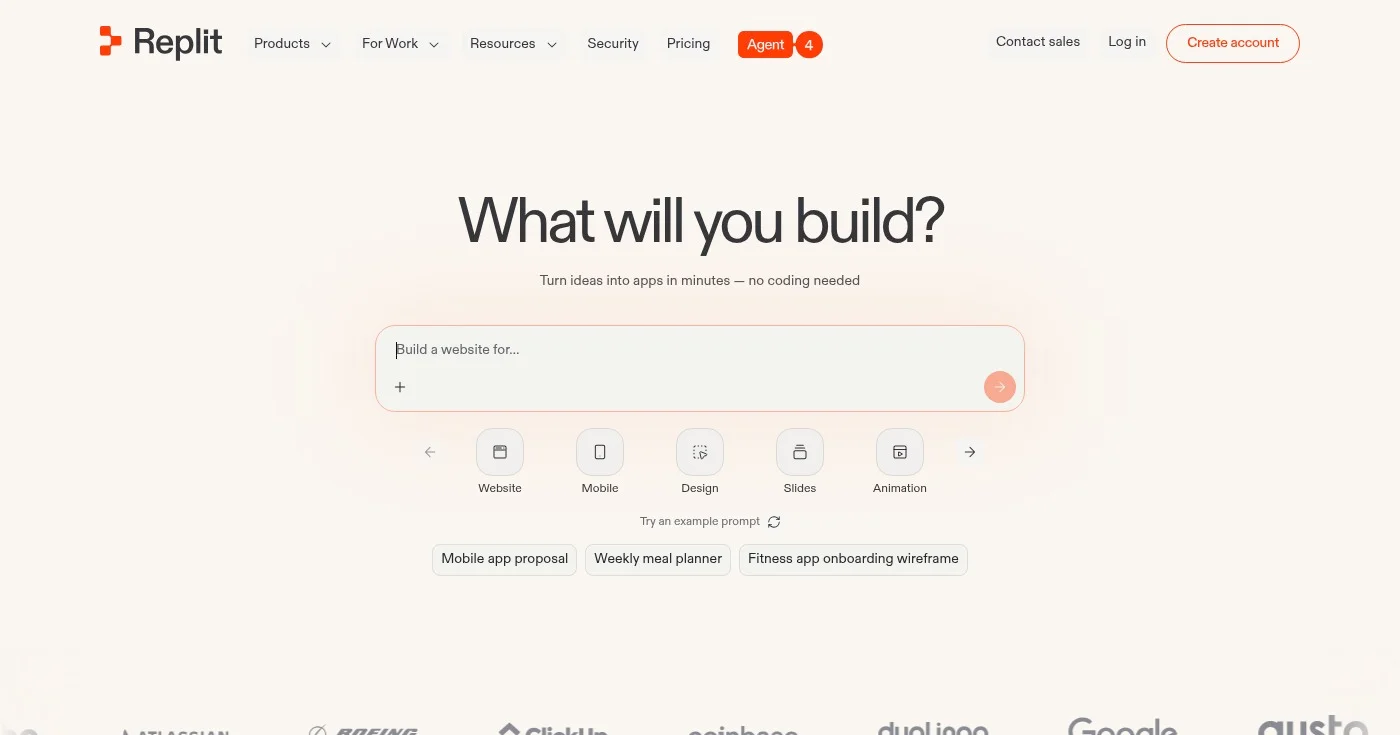
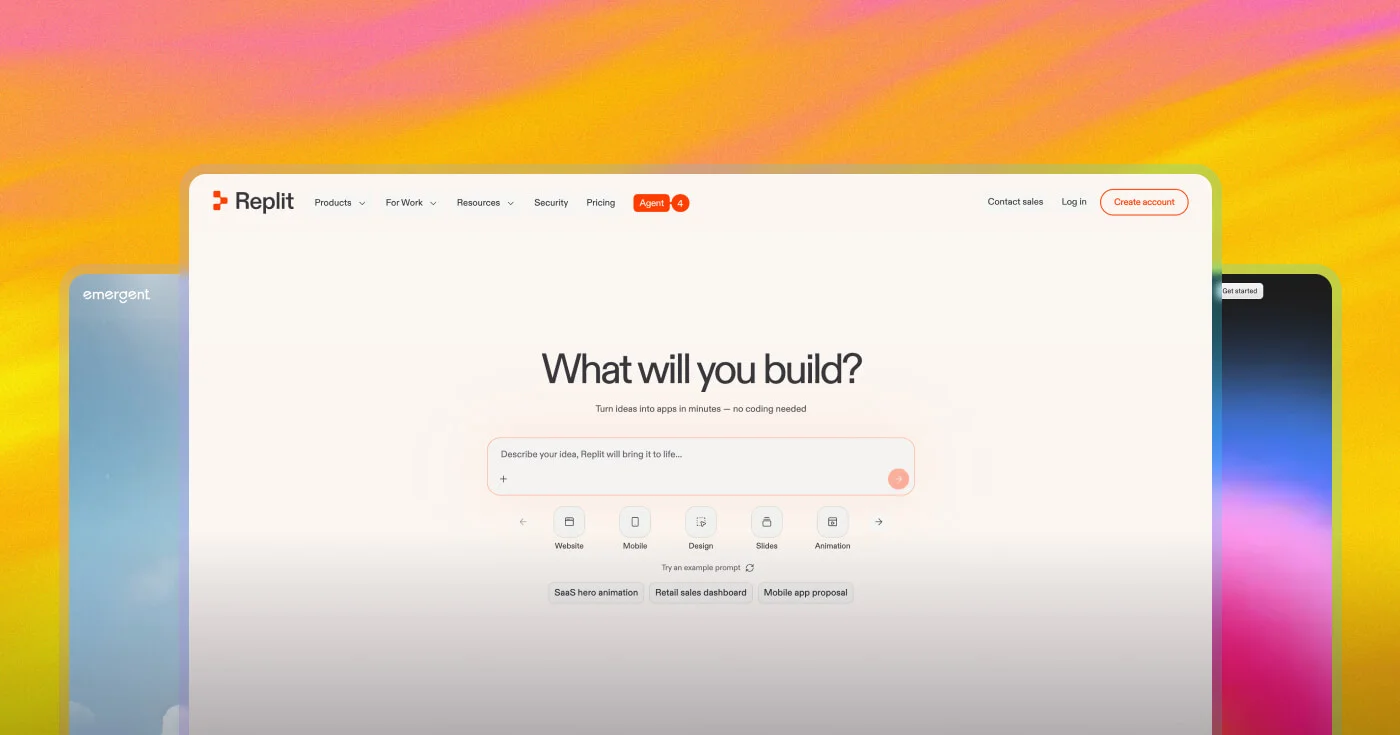
Replit is the only platform in this list offering full-stack mobile builds (iOS and Android), open router model access, GitHub sync, and App Store deployment in one package. The valuation tripled to $9B in six months on the back of a $400M Series D from Georgian. CEO Amjad Masad has been direct about what the platform exists to solve:
AI is incredible at writing code. But that's not enough to create software. You need to set up a dev environment, install packages, configure DB, and, if lucky, deploy. It's time to automate all this. Announcing Replit Agent in early access—available today for subscribers: https://t.co/WCASOez82f
The cost reality is harder than the pitch. The $25/month Core plan hides $100–$300/month in real compute and storage costs under active use. YouTube benchmarks put Replit build times at 4 minutes for simple apps and up to 10 minutes for social-app complexity, slower than Base44 or Bolt on comparable tasks.
Budget $100–$300/month on top of Core when estimating real monthly cost in active development.
Best for internal tools that must be production-secure from day one
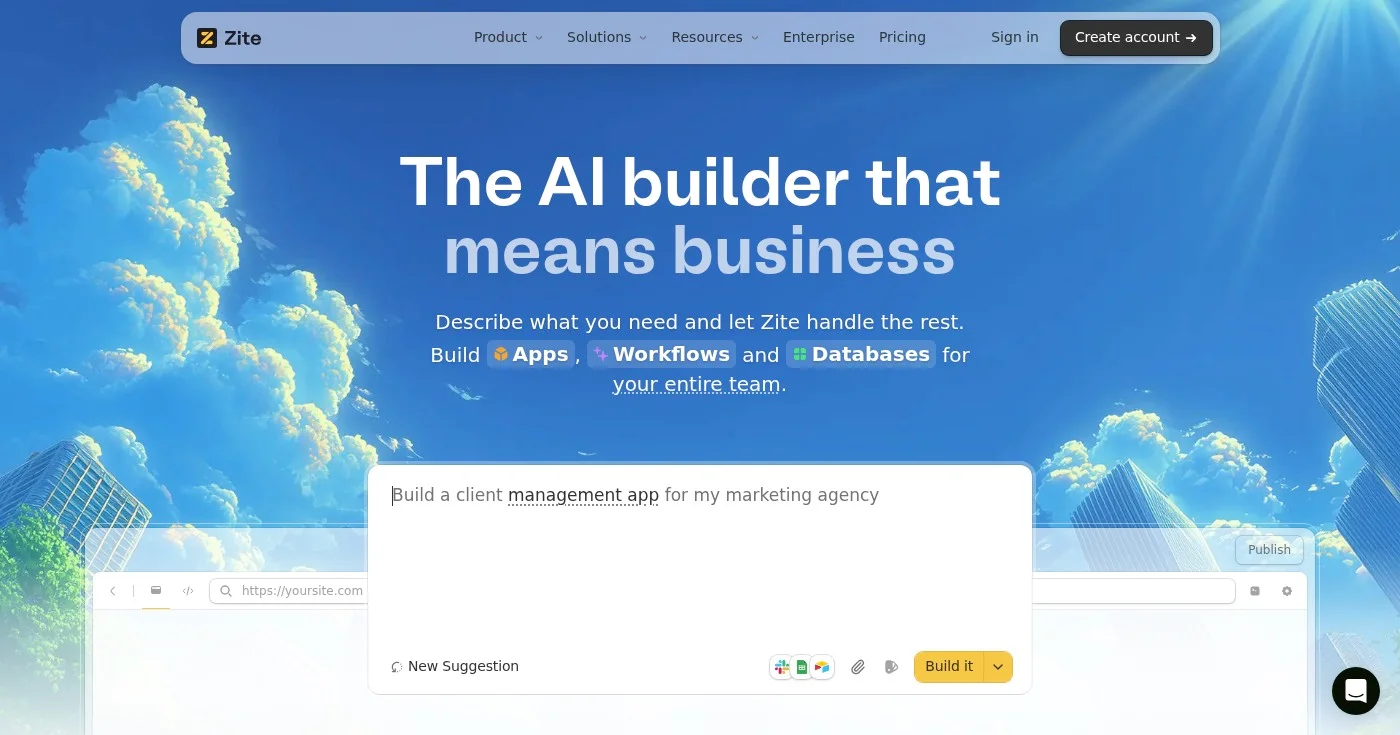
Zite is the only no-code AI app builder in this list where SOC 2 Type II certification, role-based access control, authentication, and audit logs ship on every plan including the free tier. Most tools in this category generate code that looks secure until real users probe edge cases; Zite's defaults foreclose that failure mode at the architecture level.
The deliberate trade-off is clear: Zite apps live on Zite hosting permanently with no code export. That design targets internal tools and operations dashboards, not consumer SaaS products.
Unlimited apps and unlimited users on all plans make cost modeling simple. Paid plans start at $19/month.
Flat pricing with no per-seat or per-app charges makes total cost easy to predict.
Best for healthcare apps and any use case involving regulated data
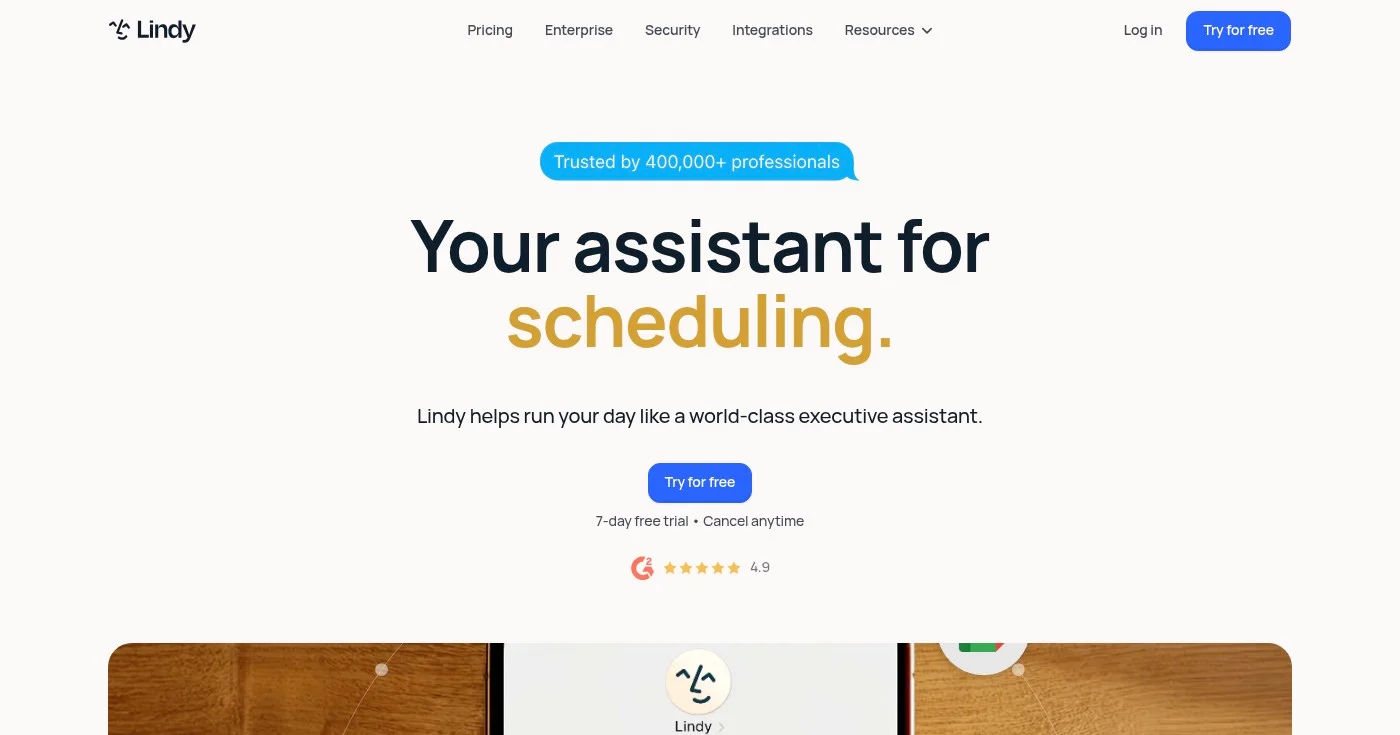
Lindy is the only no-code AI app builder with both HIPAA compliance and SOC 2 certification. If you're building any app that touches protected health information, financial records, or other regulated data, Lindy is the only credible no-code option in this category. Zero competitor articles in the current SERP top 10 cover this fact.
Beyond compliance, Lindy includes AI phone numbers for calling workflows and prebuilt automation templates. Appointment booking, intake forms, and patient communication flows are documented use cases. The $49.99/month Pro plan is the most expensive entry point in the no-code category, and a 7-day free trial applies.
For regulated industries, this is not optional. The trial is the practical on-ramp.
Best for enterprise teams running apps on existing spreadsheet data
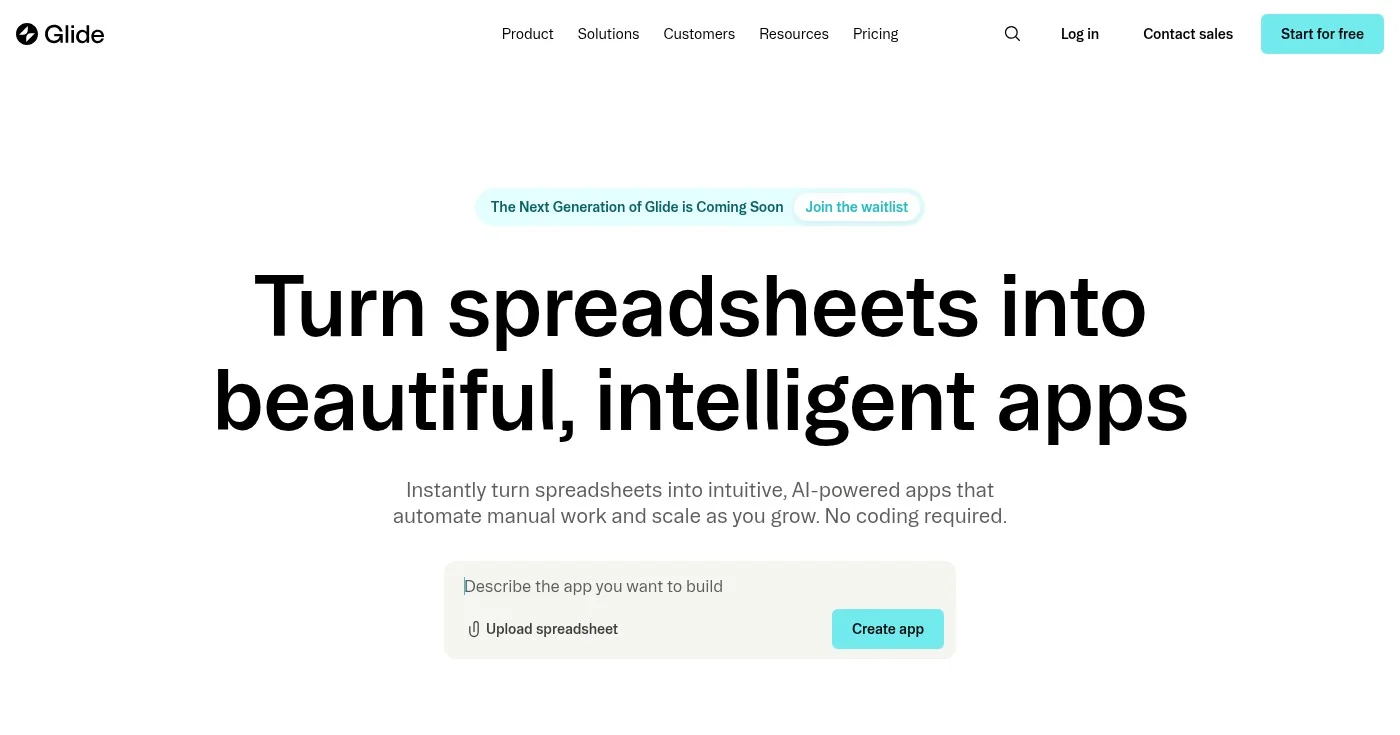
Glide turns Google Sheets, Excel, or Airtable data into AI-powered apps using a block-based visual system. The enterprise customer list covers Volkswagen, Airbus, Coca-Cola, HP, Costco, Hilton, and Sotheby's: 100,000+ companies in production. That traction reflects what Glide does best: replace manual spreadsheet workflows with maintainable purpose-built apps that non-developers can operate after handoff.
Glide co-founder Mark Probst built "Fling" as a publish button for Claude Code output because generation speed has outpaced deployment infrastructure. The Explorer plan at $19/month covers one app; the Business plan at $199/month is expensive for individuals. The free plan exists but does not support publishing.
Budget at least $19/month. The free plan only supports internal testing, not shipping.
Best for non-technical founders building serious SaaS products
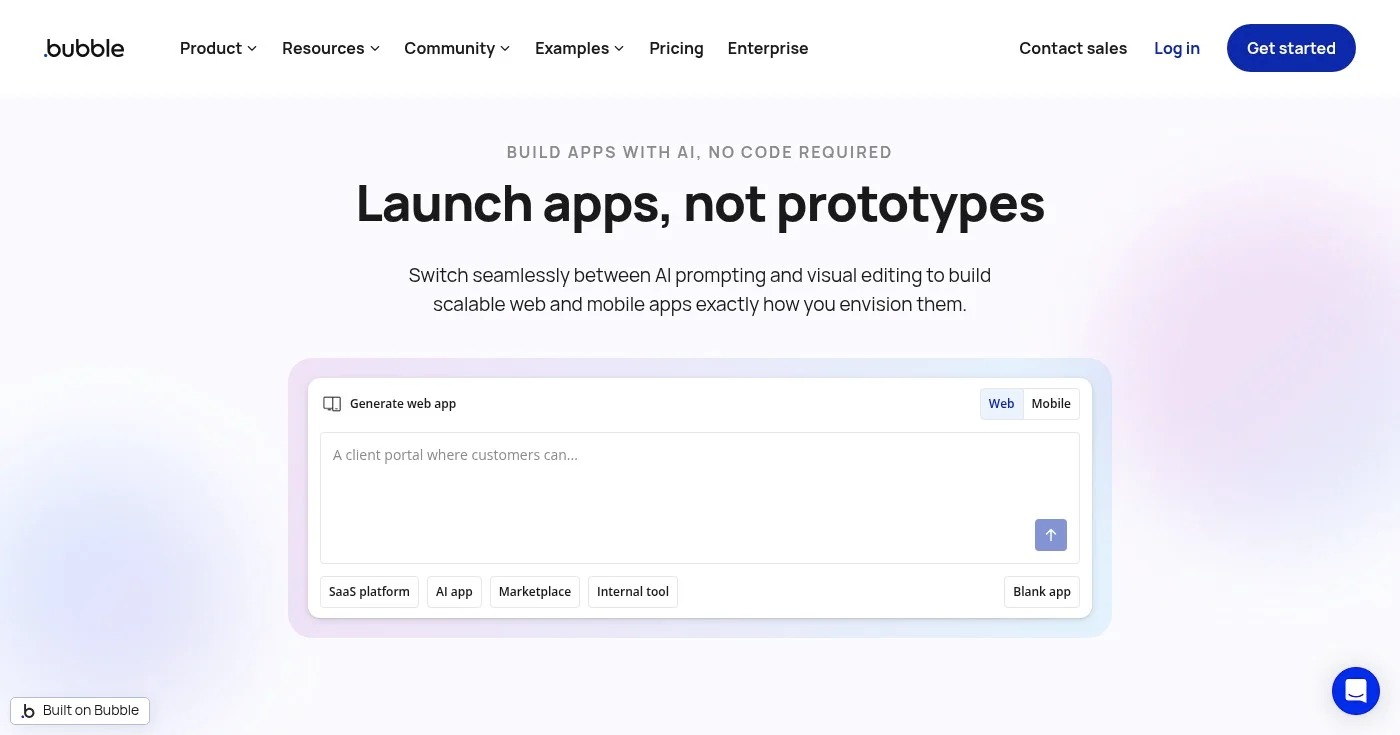
Bubble is the most established no-code platform on this list, founded in 2012, $100M funded in 2021, and $1B+ in transactions processed through customer apps. Powered by Claude Sonnet 4.6, it offers the deepest visual editor for multi-step workflows, conditional state management, and custom API integrations that lighter builders cannot handle. The AI Agent is rolling out to all existing apps between April and June 2026.
The learning curve is real. New users switching from Lovable or Bolt report bouncing off in the first 30 days.
The Workload Unit pricing system adds complexity to cost estimation. But for serious SaaS builds with complex authorization flows and multiple user roles, Bubble handles what most tools in this category cannot.
Workload Units scale with usage. Simple apps stay close to the base price.
Best for mobile-first apps where code ownership matters
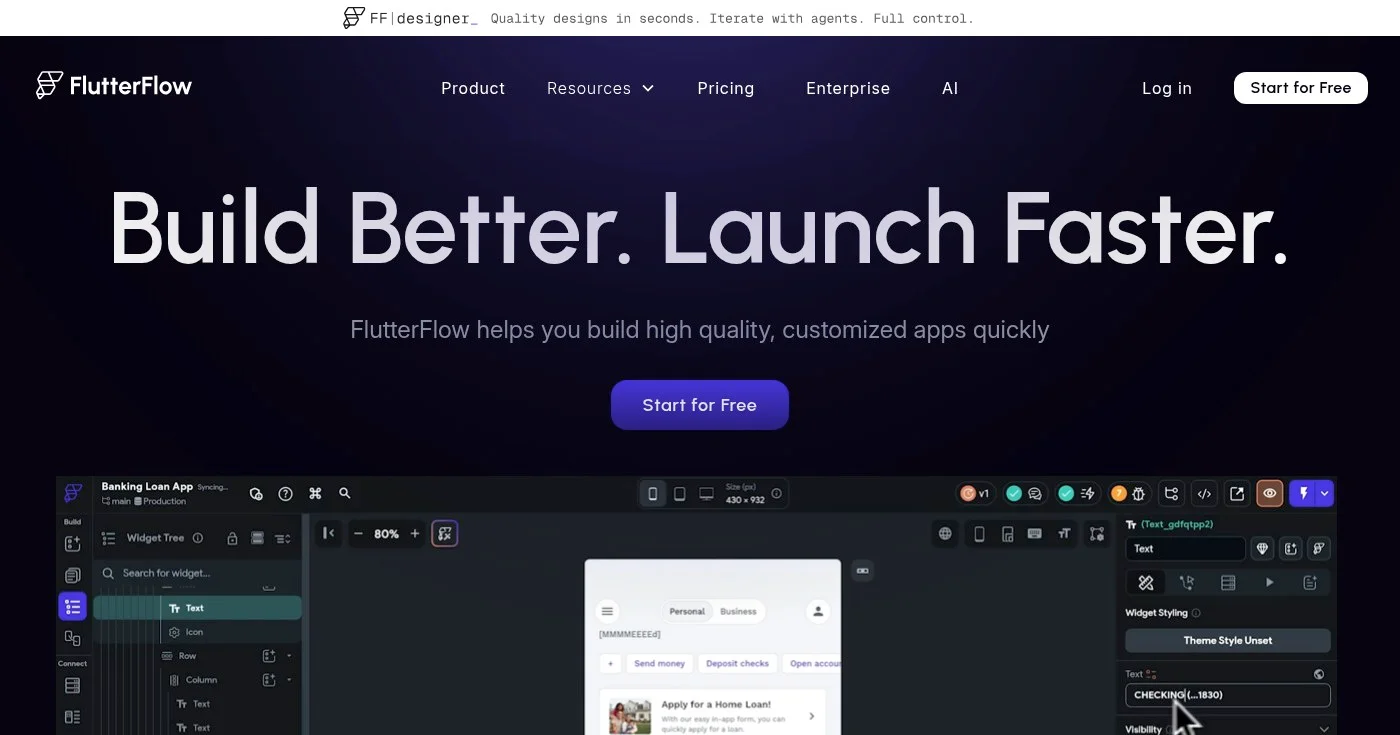
FlutterFlow is the only major AI app builder generating true cross-platform Flutter code. You get a native iOS and Android app you can export, modify in any IDE, and deploy to any hosting provider.
Google Ventures led a $25.5M Series A in January 2024. FlutterFlow includes 200+ UI components, AI component generation, and Firebase/Supabase integration standard.
You don't need to be a Flutter engineer, but understanding components and basic state management accelerates what you can build. The $80/seat/month base plan is the highest per-seat cost in this category, and Firebase/Supabase database costs are additional.
For mobile output with code ownership, FlutterFlow has no direct equivalent in the no-code category.
Add $25–$50/month minimum for Firebase/Supabase. Budget accordingly.
Best for B2B portals and dashboards built from Airtable or Google Sheets

Softr has 1M+ users globally with a focused, well-executed purpose: build web portals, client directories, or internal dashboards from Airtable or Google Sheets using a visual block system. If your data already lives in a spreadsheet and you need a customer-facing portal, Softr gets you there without backend work.
The limitation is the data dependency. Complex custom logic, multi-table joins, or apps not starting from spreadsheet data push against the platform's ceiling quickly.
On r/nocode, community consensus treats Softr as underrated for B2B portals specifically and overreached for anything requiring dynamic app logic. The free plan caps at 10 users and does not allow publishing.
The free tier supports internal testing only. Expect $49/month minimum to ship to customers.
Best for engineering and GTM teams who need production LLM apps
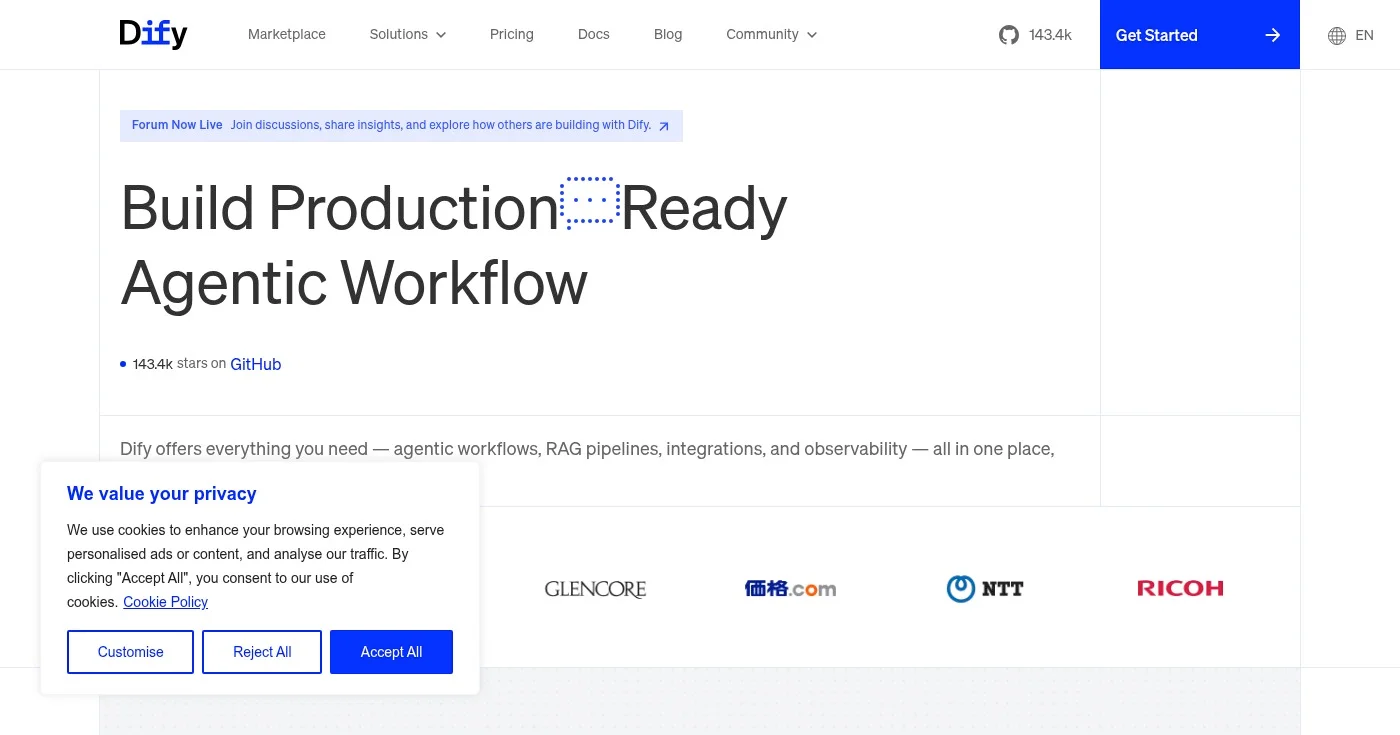
Dify combines visual workflow editing, native RAG (retrieval-augmented generation with chunking, embedding, and knowledge bases), multi-model support (OpenAI, Anthropic, Llama, Azure, HuggingFace), and agent tools in one platform. Dify raised $30M Pre-Series A in March 2026, has 100,000+ GitHub stars, and leads the visual LLM builder category on commit velocity.
Self-hosting runs on your own infrastructure at approximately $30–$200/month. The cloud Professional plan at $59/month includes managed infrastructure. For GTM engineering teams building CRM enrichment pipelines, AI-powered content workflows, or customer-facing LLM tools, Dify covers the full stack from model call to knowledge base to deployment.
Best for automations where an LLM is one step among many
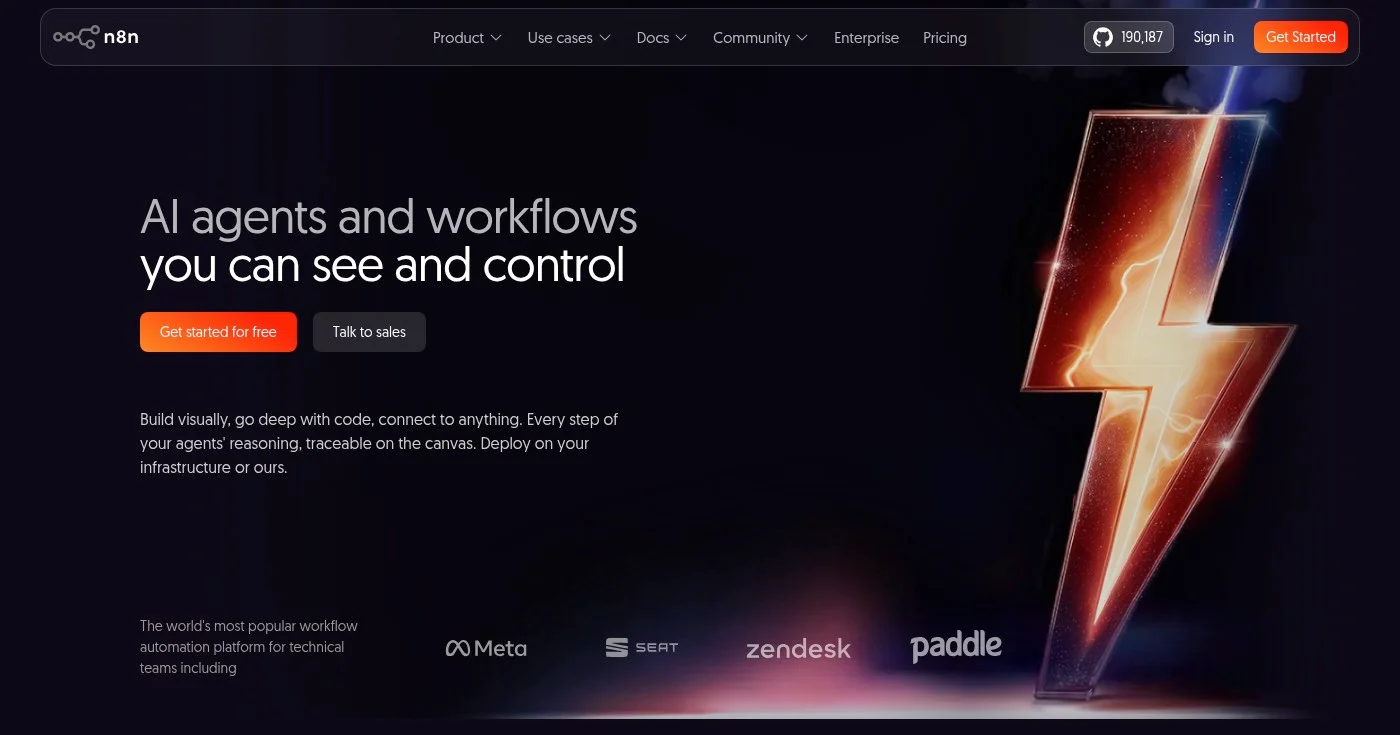
n8n is the right tool when language model calls are one node in a broader automation graph alongside CRM updates, webhook triggers, database writes, or external API calls. 300+ integrations cover most enterprise SaaS; LLM nodes slot in like any other step. n8n is open-source (fair-code license), Berlin-based, and cheaper than Zapier at scale on per-execution pricing.
The use case boundary matters: n8n is not purpose-built for LLM apps. Teams whose entire product is an LLM workflow will hit its abstraction ceiling. Teams needing an LLM step to enrich data, generate content, or route decisions inside a larger automation are well-served.
Best for engineering teams who need complete programmatic control
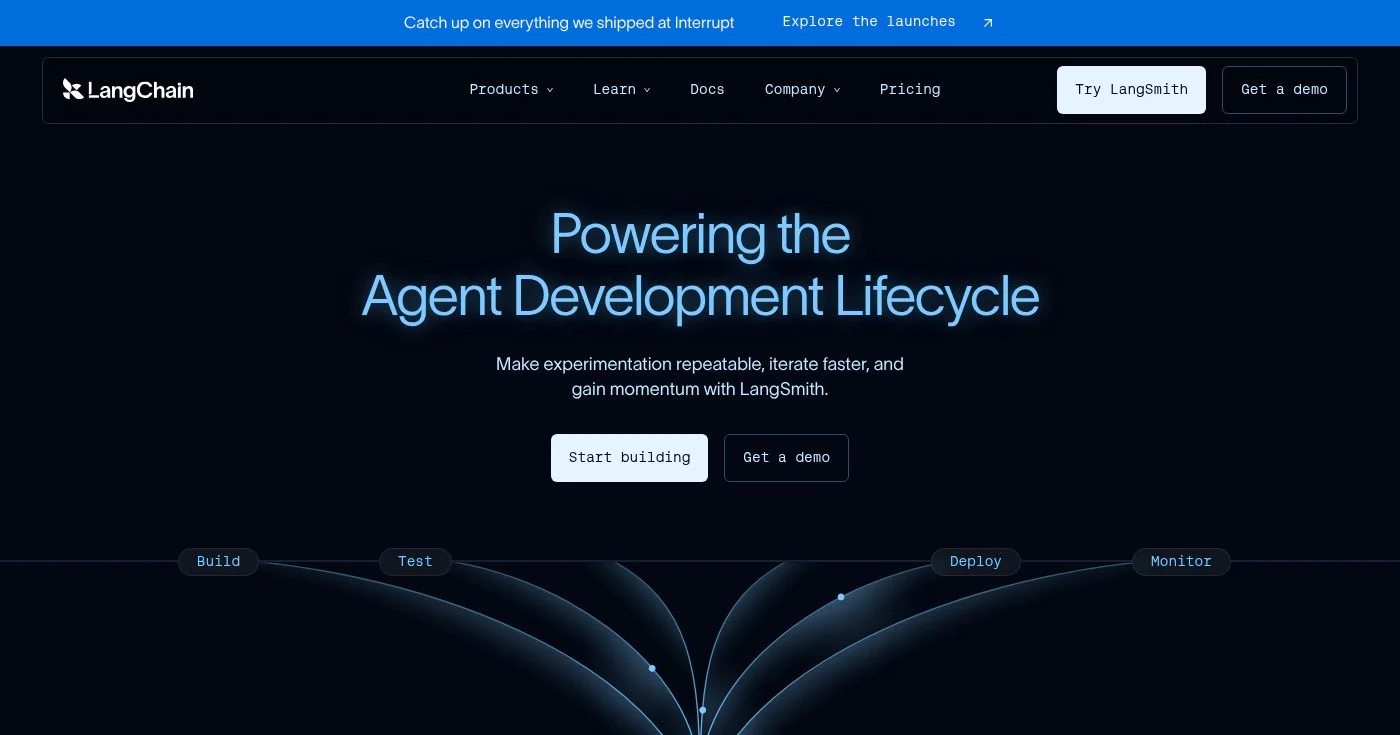
LangChain is the most-demanded AI engineering skill in 2026 hiring across Python and JavaScript. LangChain includes 100+ integrations, LangGraph for stateful multi-agent systems, and LangSmith at $39/user/month for observability, evaluations, and dataset management. If no-code builders are the consumer end of the AI app market, LangChain is the professional engineering end.
Non-engineers should start with Dify. Engineering teams who need fine-grained control over prompts, chains, retrieval logic, and evaluation pipelines will find LangChain's abstraction layer at the right level. Budget LangSmith as part of any production deployment.
Best for hackathons, solo builders, and quick LLM prototypes
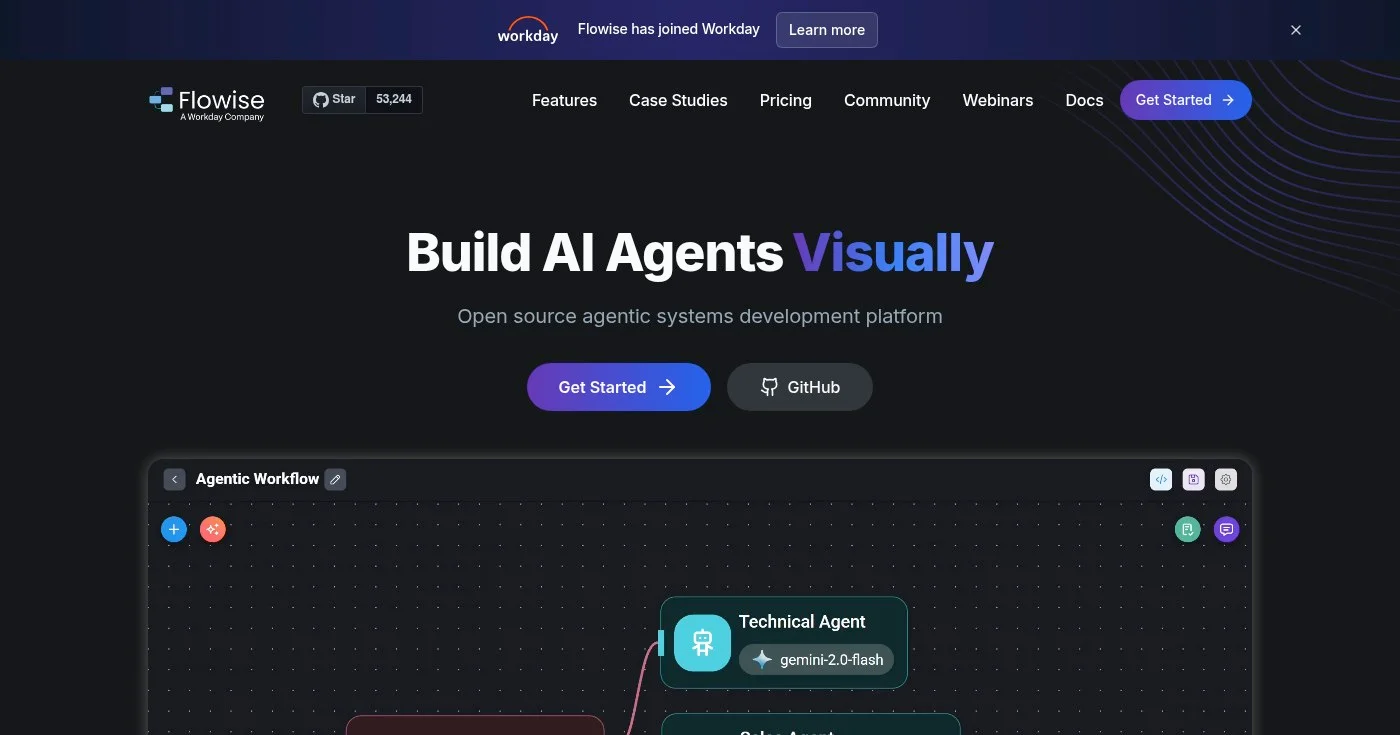
Flowise is the fastest LLM development platform to spin up from zero. Flowise runs on Apache 2.0, self-hosts for free, and provides a drag-and-drop LangChain-based visual builder with cloud plans at $35/month Starter. Teams prototype on Flowise and migrate to Dify when they hit production scale requirements.
Practical positioning: if you have a weekend, a use case, and want a working LLM prototype by Sunday, Flowise delivers. If you need to run that prototype under real production load, plan the migration to Dify or a code-based framework early.
These five tools appear in zero top-10 search results for "AI app builders" as of June 2026. Each covers a specific gap no tool above addresses:
Four scenarios that narrow the decision:

Run a local LLM on hardware you control. Covers privacy vs offline, VRAM tiers, Q4_K_M, Ollama vs vLLM, and TCO as utilization rather than one crossover.
The OpenAI API is a billed HTTP developer product. This guide covers project keys, Responses vs Completions, model pinning, and 429s.
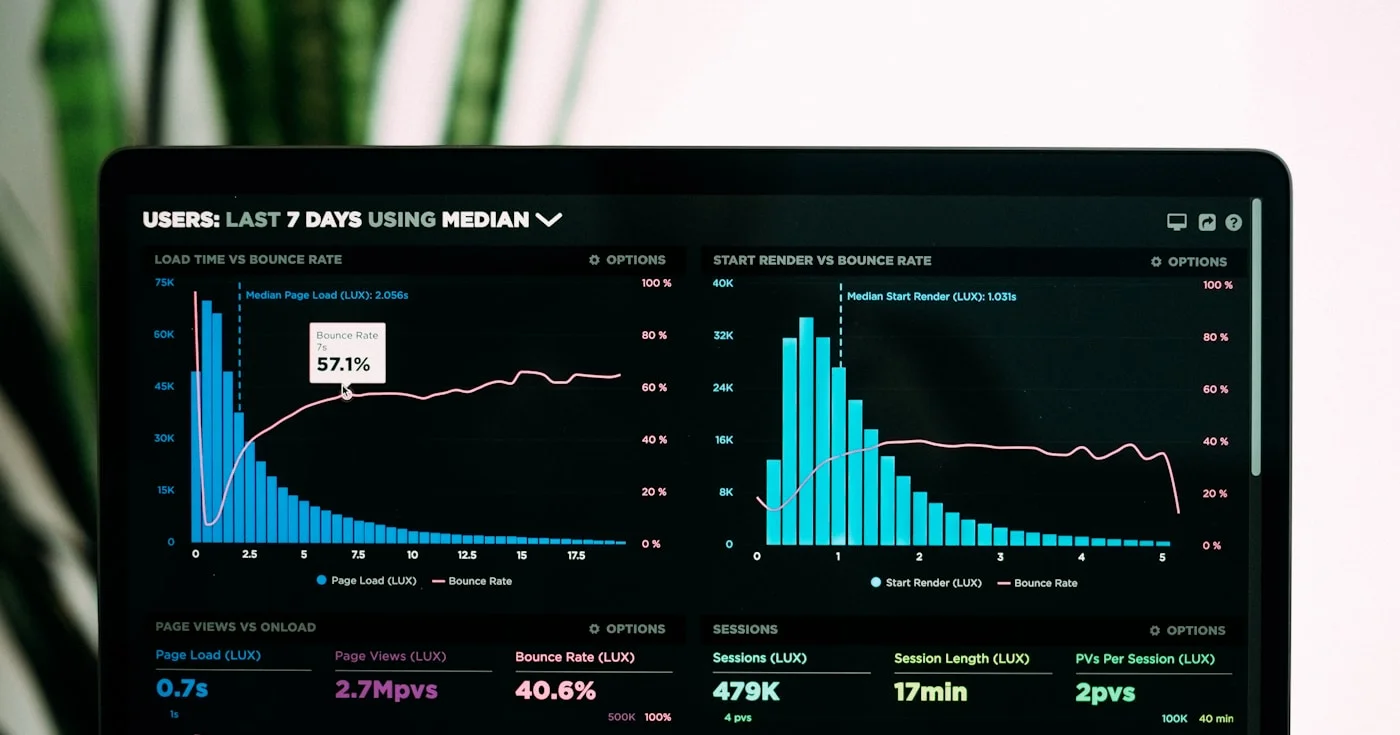
LLM observability records traces, quality scores, cost, and latency so you can explain a bad output and contain silent failures.
