
The Complete Guide to Zero-Human Companies (2026)
A zero-human company (ZHC) is a business where AI agents handle every operational function without human employees. Learn how it works, real examples earning $6
Updated 12 min read


A zero-human company (ZHC) is a business where AI agents handle every operational function without human employees. Learn how it works, real examples earning $6
A zero-human company (ZHC) is a business where AI agents handle every operational function without human employees: strategy, product development, marketing, sales, and customer support. Polsia, run by solo founder Ben Cera, reports $6.9M annual run rate managing 6,565 active AI-operated companies as of April 2026. FelixCraft generated $78,000 in revenue in 30 days without a single employee.
The concept went from theoretical to operational in early 2026. This guide covers how ZHCs work, the architecture behind the most successful examples, how to build one, and an honest assessment of where the model breaks down.
A zero-human company is a business where AI agents perform every operational function without human employees on payroll. The "zero" refers to employees, not people. You still set direction and make judgment calls.
The agents handle execution.
Most companies use AI as a tool alongside human workers. In a ZHC, no human sits between the agent's decision and the action. The agent decides to ship a bug fix and ships it.
The agent decides to email a customer and sends it. Humans can intervene, but autonomous execution is the default.
Think of it this way: a traditional business hires humans for every operational role. A zero-human company hires AI for those roles and keeps one human at the top making the calls that actually matter, without managing day-to-day tasks.
Two things changed simultaneously. First, AI got good enough to replace real work. In 2023, AI could write a passable blog post.
In 2026, AI writes entire content strategies, drafts sales pages, builds working software, and handles customer support at a level indistinguishable from professional human output for most tasks.
Second, the tools went affordable. 88% of enterprises now report regular AI use, and 80% of Fortune 500 companies run active AI agents. The full operational stack that once cost $15,000-25,000 per month in salaries now costs between $0 and a few hundred dollars in API calls.
A zero-human company requires three components: agents capable of end-to-end work, a coordination system that keeps them aligned, and infrastructure that lets them act on the world (deploy code, send emails, process payments).
Most ZHC implementations follow a recurring cycle:
Some run on a daily cadence, with an AI "CEO" waking up each morning, reviewing the business, and acting. Others run continuously with multiple agents working in parallel.
The most battle-tested ZHC pattern uses nested agent layers, popularized by Flowtivity's agentic company model:
This structure means you manage one relationship: with the CEO agent. That agent manages the company. Flowtivity runs this entire structure for under $60 AUD per day using OpenClaw as the CEO layer and Paperclip as the department orchestrator.
The detail that separates a ZHC from a chatbot is persistent memory. Agents store what they learn over time: which email subject lines convert, which customer segments churn, which marketing channels drive qualified leads.
Polsia's Cross-Company Learning System anonymizes insights from each AI-run company and shares them across all 6,565 companies on the platform. Every company gets smarter as the platform grows.
Ben Cera's Polsia is the most-cited proof point in the ZHC space. One founder. Zero employees.
The live dashboard shows 6,565 active companies as of April 2026, with 582,357 tasks completed and 435,542 emails sent, all by agents. The company reports $6.9M ARR with 30% week-over-week growth.
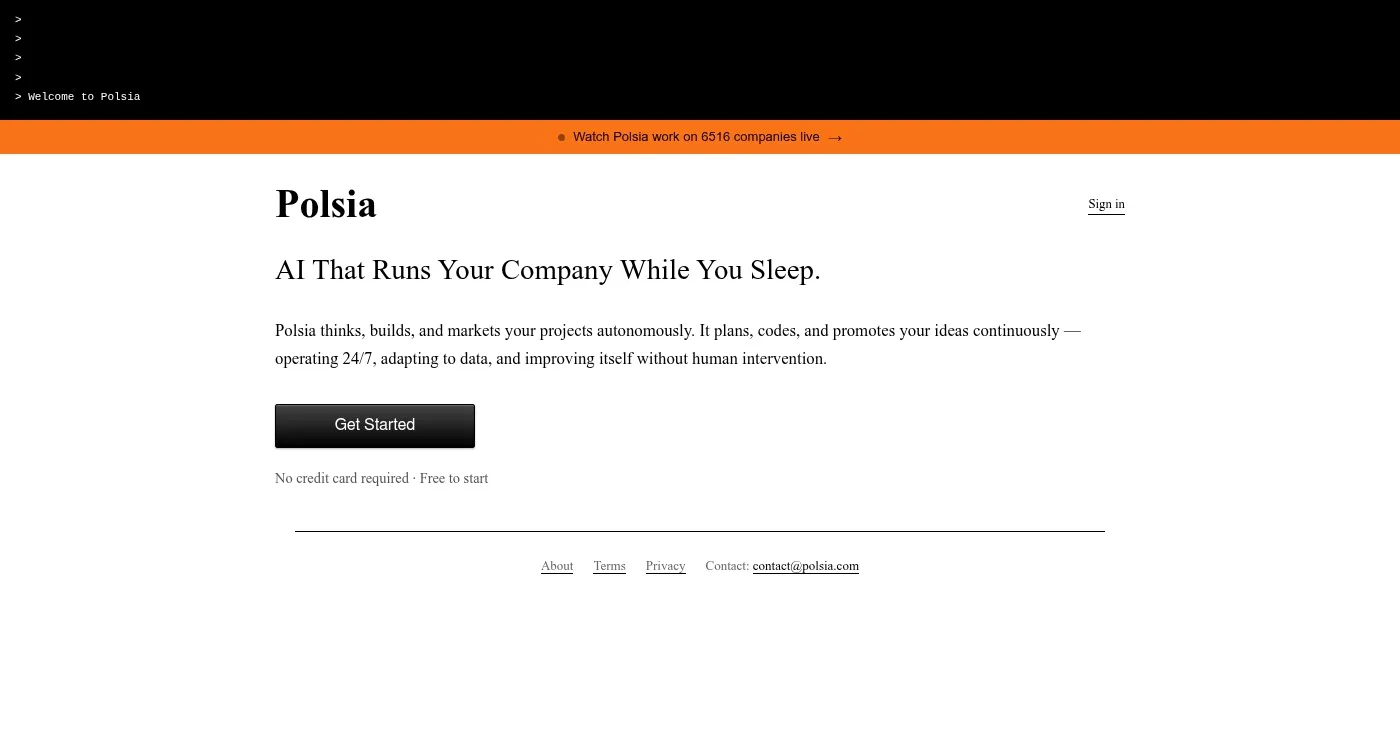
Cera shared the $0 to $1M ARR in 30 days milestone live on the Latent Space Podcast on February 26, 2026. The business model: $49/month per company, plus a revenue share. The primary reasoning layer is Claude acting as an AI CEO for each company, making strategic decisions and coordinating agents.
FelixCraft generated $78,000 in revenue in one month, primarily from low-cost digital guidebook products and marketplace fees. The platform automates the entire company-building process: ideation, market research, landing page creation, and ongoing operations.
KellyClaudeAI, created by Austen Allred (founder of Gauntlet AI), is an autonomous AI agent that builds and ships iOS apps without human involvement. As of early 2026, Kelly uses multiple sub-agents for design, code, testing, and App Store submission. The project has since expanded into AI-assisted development services and educational content.
For a larger-scale data point, the New York Times reported on Medvi, a company two brothers built to a $1.8 billion valuation with fewer than two human employees. AI handled the operational and analytical work that would normally require hundreds of staff.
OpenClaw is the open-source agent framework powering many ZHC deployments. Built as a weekend project by Peter Steinberger, it reached 157,000+ GitHub stars within 60 days of going viral in January 2026.
OpenAI acquired Steinberger in February 2026. OpenClaw connects to 50+ integrations and executes multi-step workflows while running persistently in the background.
Choose an automation-first business model. Not every business suits the ZHC model. Digital products, SaaS, content and media, and service arbitrage all work well. Physical product businesses with complex logistics, high-trust professional services, and regulated industries are significantly harder.
Define your agent roles. List every role a traditional business would hire for: CEO (strategy, delegation), marketer, developer, customer support, content creator, analyst. Each becomes an agent you will configure or connect.
Get your LLM access sorted. Claude and GPT-4o are the two primary reasoning layers used in production ZHCs. Both offer usage-based API pricing. Claude's strength is long-context reasoning and instruction-following for complex multi-step tasks.
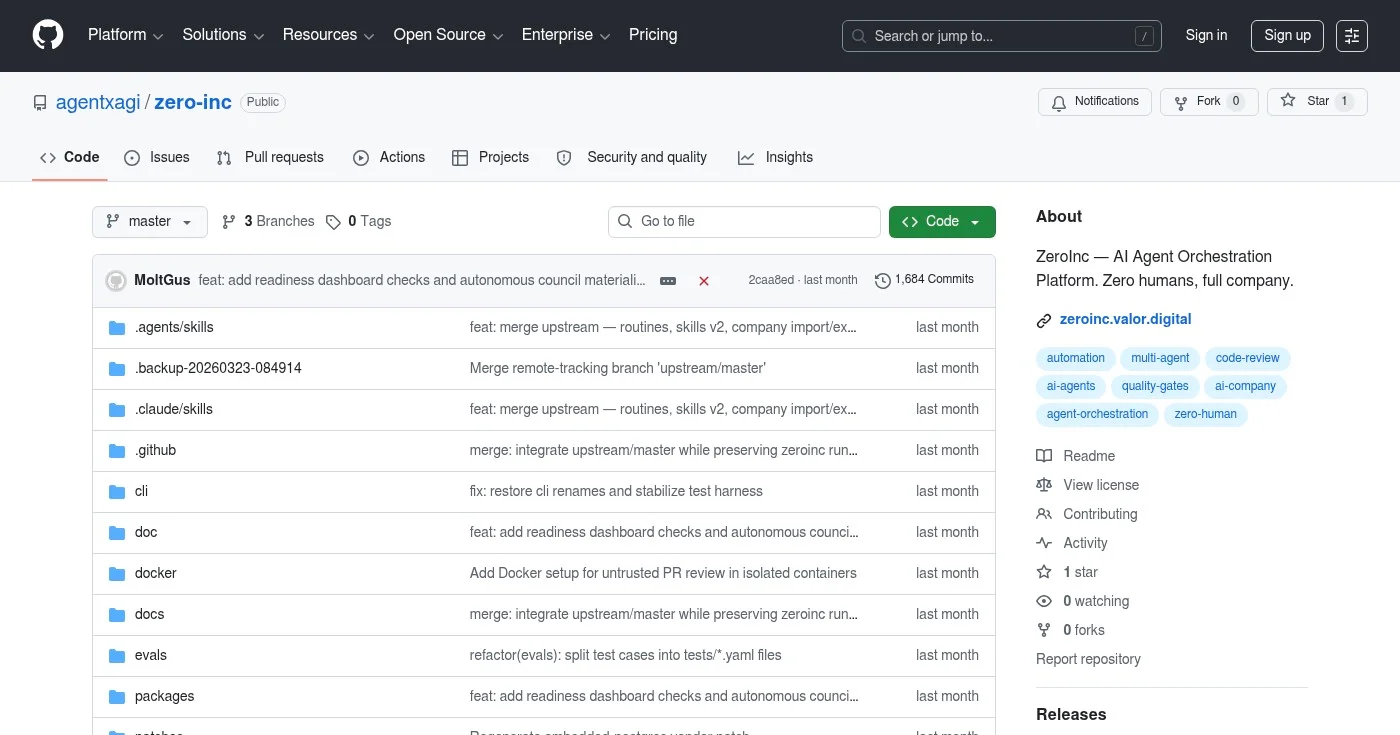
Deploy a coordinator/CEO agent. This is the agent that wakes up each morning, reviews the business state, and delegates work. OpenClaw is the most widely deployed option. It runs on your own server, connects to messaging apps (Telegram, Slack, WhatsApp), and maintains persistent memory between sessions.
Build specialized agents per domain. Each department gets its own agent with domain-specific tools and instructions. A marketing agent has access to email tools, social media APIs, and analytics. A development agent has code execution, GitHub access, and deployment credentials.
Connect your tools. n8n and Make.com handle the integration layer, connecting your agents to Stripe, email providers, social platforms, analytics, and databases. Both have free tiers sufficient for early-stage ZHC operations.
Set up persistent memory. Simple implementations use structured text files (OpenClaw's MEMORY.md pattern). More sophisticated setups use vector databases to store and retrieve learned context at scale.
Define heartbeat cadences. A heartbeat is the scheduled trigger that wakes an agent to review the business state and act. Daily reviews for the CEO agent, hourly monitoring for metrics and alerts, and weekly planning cycles for strategy are standard patterns.
Build the monitoring layer. Agents should watch your key metrics (revenue, churn, support queue, error rates) and alert you when something needs attention. This is the layer where humans get real-time visibility without managing each agent manually.
Apply the progressive trust model. The win.sh approach is the most pragmatic framework for rolling out autonomy:
Stage | Agent Behavior |
|---|---|
Day 1-30 | Agents report only. No autonomous actions |
Day 31-60 | Agents execute low-risk tasks (sending reports, updating docs) |
Day 61-90 | Agents execute within explicitly approved boundaries |
Day 90+ | Expanded autonomy with human review for high-stakes actions |
You always set the limits. Autonomy is earned per action type, not granted globally.
Framework | Role | Cost | Open Source |
|---|---|---|---|
Persistent CEO agent, messaging integration | Free | Yes | |
Role-based agent teams | Free/Paid | Yes | |
Agent tooling and memory | Free/Paid | Yes | |
Workflow automation and integrations | Free tier | Yes | |
No-code automation and integrations | Free tier | No |
Traditional Role | ZHC Tool |
|---|---|
Content Writer | Claude API |
Graphic Designer | Canva + DALL-E |
Web Developer | Lovable / Cursor |
Customer Support | Crisp (AI chatbot) |
Social Media Manager | Buffer + Claude |
Marketing Ops | Make.com / n8n |
Email Marketing | Kit (ConvertKit) |
Bookkeeper | Wave |
Virtual Assistant | Claude + Make.com |
This stack can run at $0 to $200/month in early stages before revenue justifies upgrading. Gartner projects that by 2028, 33% of enterprise software will include agentic AI, up from less than 1% in 2024, so many of these tools are rapidly adding agent-native features.
The most common failure mode: delegating customer-facing interactions before agents have enough context to handle them well. Customers detect AI-generated responses at scale, and the cost of a trust breakdown with early customers is disproportionately high.
Keep yourself in the loop on customer conversations until agents have 90+ days of context on your customer base.
Practitioners warn that running 100+ agents simultaneously with no human oversight consistently produces coordination failures. Agents contradict each other, loop on tasks, or take actions that conflict with each other's work.
Start with three to five agents and expand as you build confidence in the coordination layer.
As a builder documented on Reddit after 90 days: "The zero-human backend works. The problem is the top of funnel." The ZHC architecture handles execution. It does not solve distribution.
Building an autonomous business that no one finds produces zero revenue. Solve the distribution problem with human effort first, then automate it once you understand the channels.
Agents are excellent at executing defined strategies. They are poor at developing strategy from scratch without rich business context. The human founder's primary job in a ZHC is setting strategic direction clearly enough that agents can execute it correctly.
Vague direction produces unpredictable agent behavior.
Even well-funded AI infrastructure hits limits. Build retry logic, fallback models, and degraded-mode operations into every agent from day one. Demand spikes routinely cause API rate limits and outages across the major LLM providers.
The ZHC Institute's 25 blueprints document the business models that lend themselves to full automation. The five categories with the strongest track records:
Agents research demand, create digital products (guides, templates, courses, tools), list them on marketplaces (Gumroad, Lemon Squeezy), and handle fulfillment automatically. Revenue is predictable, delivery is instant, and the entire funnel can be automated.
Agents build software products using code execution tools, deploy them, handle customer support, monitor metrics, and ship improvements. The recurring revenue model makes unit economics predictable. KellyClaudeAI applied this to iOS apps using multiple sub-agents for design, code, testing, and App Store submission.
Agents research topics, write articles, publish them to content management systems, distribute across social channels, and optimize based on performance data. AI Turnpoint and similar publications increasingly use agent-assisted publishing pipelines.
Agents fulfill service requests (copywriting, design briefs, research reports) by using AI to complete the work while automated systems handle client acquisition. The margin between client price and AI cost creates the business model.
More speculative but active in early 2026: AI agents offering services to other AI agents via micropayment protocols. ZHC Institute blueprints document setups where agents sell reputation scoring, signal feeds, and code auditing to other agents autonomously.
The zero-human model is not without serious critics, and understanding the counterarguments makes your implementation better.
One analysis draws an analogy to perpetual motion machines: ZHCs risk becoming self-referential economic systems where agents trade value among themselves without generating real wealth. Finance, like energy, must ultimately come from real economic production. Only ZHCs plugged into genuine human and industrial value will survive long-term.
Critics compare ZHC narratives to the dot-com boom, blockchain, ICOs, and NFTs. The skeptical case centers on unaudited revenue claims and platforms incentivized to inflate success stories.
Trust in fully autonomous AI agents is declining: from 43% to 27% over 12 months according to Google Cloud's 2026 AI Business Trends report, as organizations encounter reliability problems in production.
The pragmatic middle ground comes from win.sh: "The real goal isn't zero humans. It's zero humans doing work you don't like."
The zero-human company is no longer a thought experiment. Polsia, FelixCraft, and dozens of other early deployments prove that AI agents can run businesses generating real revenue in 2026.
The AI agents market growing toward $52.62B by 2030 signals that the infrastructure and tooling will only accelerate.
Start with the progressive trust model: report only for 30 days, then expand autonomy carefully. Solve distribution before you solve automation.
The ZHC that actually works is not about eliminating humans from your company. It is about eliminating humans from work that does not require human judgment.

OpenAI rolled out Chronicle for its Codex macOS desktop app, an opt-in research preview that captures periodic screenshots and stores text summaries locally so

Anthropic's Claude Managed Agents launches in public beta, promising to cut AI agent deployment from months to days with managed cloud infrastructure and built-
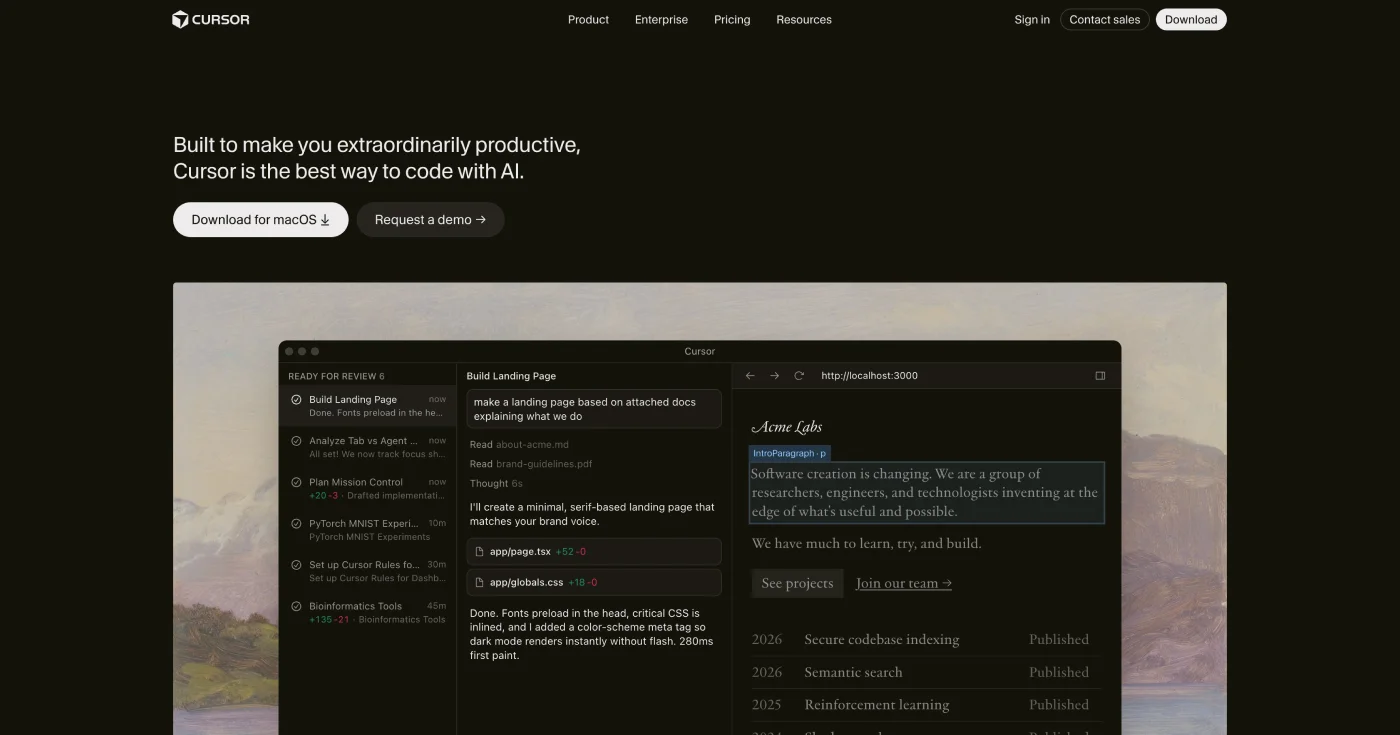
Cursor 3 introduces the Agents Window, a unified workspace for running parallel AI coding agents locally and in the cloud.
