
Gemini or ChatGPT: Which Plan Should You Pay For?
Gemini wins on price, storage and Google apps; ChatGPT wins on coding and agent access. Plans, models and team seats compared, checked 27 Nov 2026.
Updated 10 min read


Gemini wins on price, storage and Google apps; ChatGPT wins on coding and agent access. Plans, models and team seats compared, checked 27 Nov 2026.
Gemini wins for people who live in Google apps and want the cheapest paid tier; ChatGPT wins for people who want coding and agents built into every plan. Google AI Pro costs $19.99 a month and bundles Gemini 4 Neon with 5 TB of storage, while ChatGPT Plus costs $20 a month and adds GPT-6.2 and expanded Codex usage.
Both vendors changed their line-ups in the last ten days, and the Gemini API price for Carbon and Argon doubles on 1 December 2026. This comparison walks through the plan ladder on each side, five head-to-head workloads, team seats and API costs, with every price checked on the vendors' own pages on 27 November 2026.
In this comparison, you'll see how Gemini and ChatGPT stack up on models per price tier, daily work inside your apps, coding, team data defaults and API cost.
Feature | Gemini | ChatGPT |
|---|---|---|
Best For | Google Workspace users, search-heavy work, budget tiers | Coding, agents, one app for everything |
Free plan | ||
Entry paid plan | ||
Plan around $20 | ||
Model at that plan | Gemini 4 Neon and Hydrogen | GPT-6.2 |
Top consumer plans | ||
Team plan | Gemini inside Google Workspace | |
Key Strength | Price, bundled storage, Google apps | Coding access, agents, connectors |
Key Weakness | Best models sit behind Pro and Ultra | Go may include ads; top tiers cost up to $500/mo |
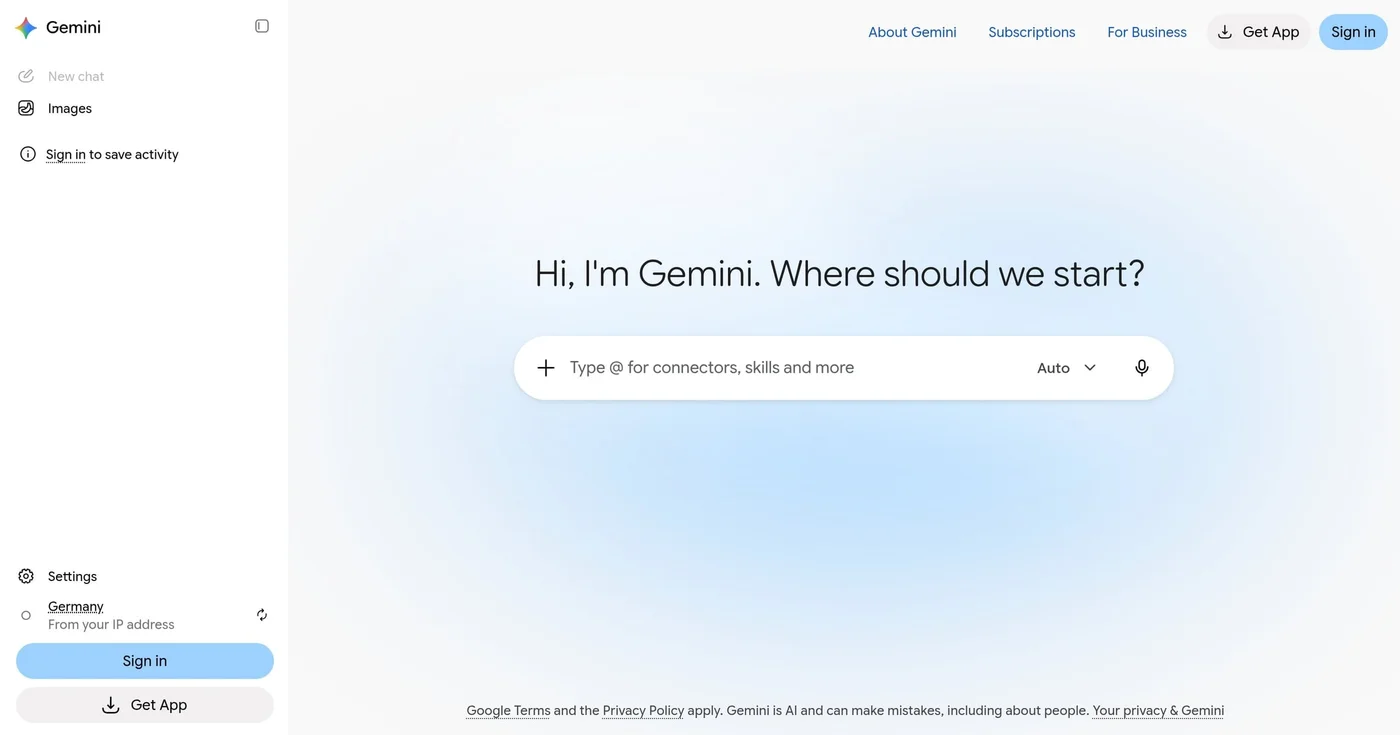
Gemini is Google's AI assistant, sold as the Gemini app plus Gemini inside Gmail, Docs, Sheets and Chrome. The free plan includes auto model selection, image generation and editing, Deep Research, Gemini Live, Canvas and Skills, with 15 GB of storage shared across Gmail, Drive and Photos.
Google runs three Gemini 4 models on the consumer side.
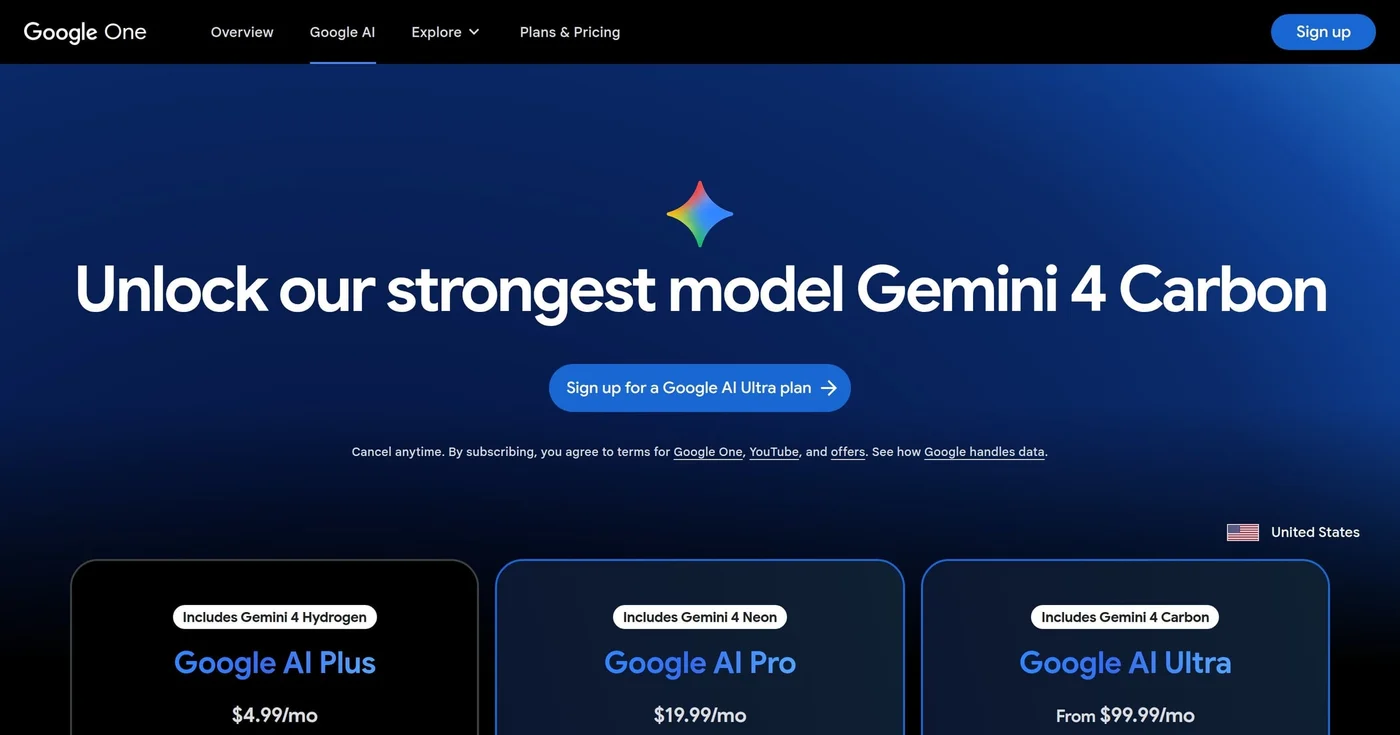
Hydrogen is the fast everyday model, and free users reach it through auto model selection. Neon is the frontier-level model for Pro and Ultra subscribers, announced on 18 November. Carbon is the strongest model and is limited to Ultra in the Gemini app.
Gemini also reaches beyond chat. Tasks in Gemini, powered by Hydrogen, became free on 17 November for users in Australia, Canada, Korea, the US, India and Japan.
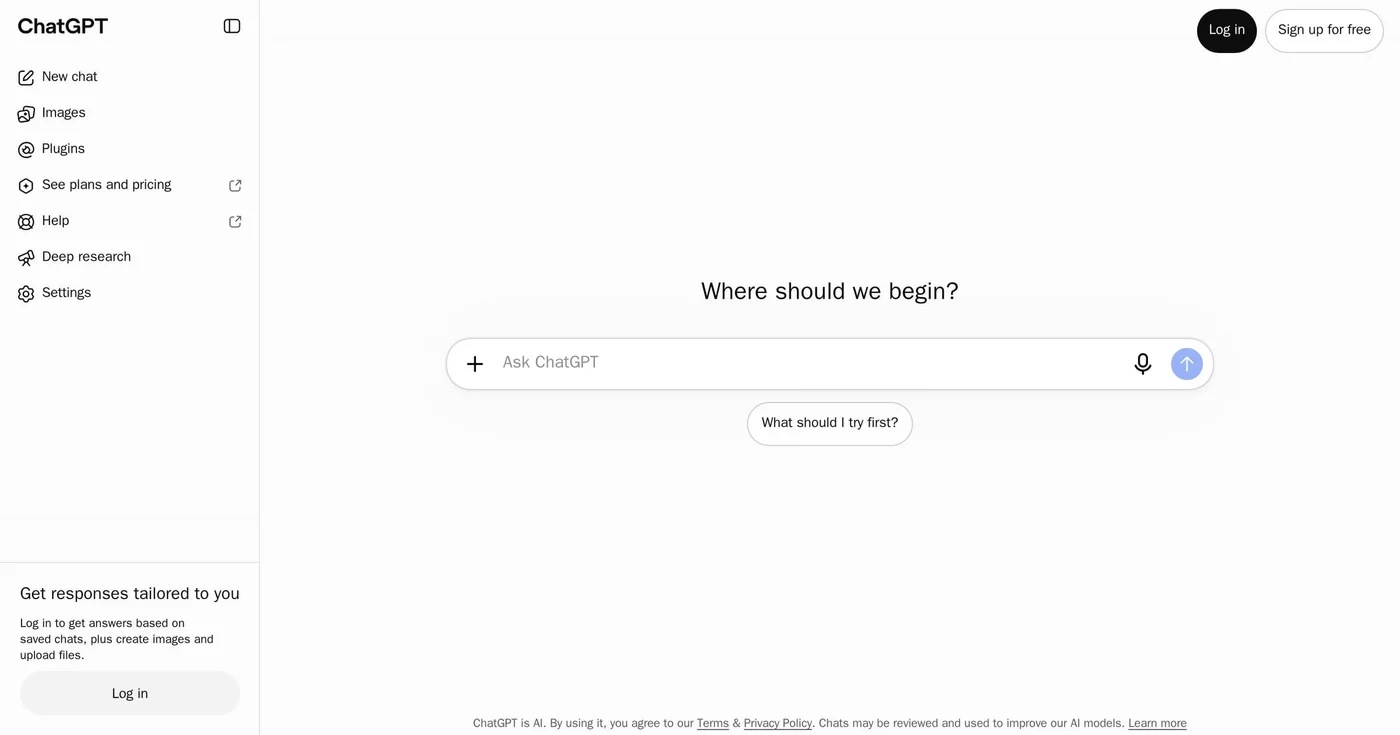
ChatGPT is OpenAI's assistant, split into Chat, ChatGPT Work and Codex. The Free plan gives unlimited text chats with GPT-6, plus limited uploads, image creation, voice, deep research, Codex access and Work access on desktop.
On 17 November OpenAI put GPT-6.2 Astra and Sol into ChatGPT Work and Codex. On 23 November it began rolling out GPT-6.2 in the chat tab for Plus, Pro, Business and Enterprise, powered by a version of GPT-6.2 Sol. OpenAI describes Astra as its frontier model for complex work and Sol as the efficient model for everyday tasks.
The Pro plan page adds Pro reasoning on GPT-6 Astra and Dot, an always-on agent. Pro comes in three tiers: Pro 100 at $100, Pro 200 at $200 and Pro 500 at $500 a month.
Read the ladders side by side and the pattern is clear. Google gives you a named model at every step; OpenAI gives you more plan steps at the top.
Tier | Gemini | ChatGPT |
|---|---|---|
Free | $0, Hydrogen via auto model selection | $0, GPT-6 text chats (see discrepancy above) |
Entry paid | $4.99, Hydrogen, 2x free limits | $8, more messages, uploads and image creation |
Around $20 | $19.99, Neon and Hydrogen, 4x free limits | $20, GPT-6.2 and expanded Codex |
$100 and up | $99.99 (5x Pro limits) or $199.99 (20x), highest Carbon access | $100, $200 or $500, Pro reasoning on GPT-6 Astra |
Google lists a 1 million-token context window for Neon in the API. OpenAI lists a 256K total context window for GPT reasoning on Go and Plus and 400K on Pro. These are different surfaces, so test with your own documents.
Winner: Gemini. Below $20 it gives you a named Gemini 4 model at every step plus bundled storage; ChatGPT's advantage starts once you want Work and Codex.
Gemini's advantage is placement. Google AI Plus adds Gemini in Gmail and Chrome auto browse, and Pro extends it to Docs and Sheets. If your team already writes and files in Google apps, the assistant meets the work.
ChatGPT meets the work through connectors. On ChatGPT Business it connects to Google Workspace, Slack, GitHub and Microsoft 365, and the Plus plan adds scheduled tasks. That helps teams split across several suites.
A founder writing on LinkedIn put the decision plainly. Matt Village said "It depends on where your work actually happens." Pedro Domingos, explaining why he picked Gemini, said "It integrates better with everything else I already have in Google."
Winner: Gemini for Google Workspace teams. ChatGPT for teams that mix Slack, GitHub and Microsoft 365.
ChatGPT puts coding in every plan. Codex access is limited on Free and expanded on Plus, and Pro adds longer Codex and Work sessions. OpenAI says GPT-6.2 Astra can trace a bug across services, fix it and test the result, while Sol suits pull-request review and revising code after feedback.
Google's coding surface is Google Antigravity and AI Studio, and its plan pages list that access under Pro and Ultra, not under Plus. Google's blog says Carbon is built for tasks that test the limits of a model, such as complex multi-step coding and debugging, and that Hydrogen handles rapid execution in agentic workflows.
On r/technology in April 2026, before the Gemini 4 line-up, one commenter whose employer provides both plans said ChatGPT's coding was far above Gemini's for quick tools. Gemini was better at explaining each step. Treat that as one dated anecdote.
Winner: ChatGPT for entry-level coding access. Gemini closes the gap at Pro and Ultra.
Business defaults line up. ChatGPT Business lists no training on business data by default, SAML, SSO and MFA, usage analytics and up to $500 a month in API credits for the workspace. Google Workspace says that for Chat with AI in Gemini your company data is not used to train models.
Individual plans need care on both sides.
ChatGPT's individual plans list model training with an opt-out. Google's Gemini Apps Privacy Hub says you control training in Gemini History and that temporary chats are not used to train its models. It also says human reviewers read a subset of chats, so it tells you not to enter confidential information.
Winner: Tie. Both default to no training on business data; the real difference is whether your team already pays for Workspace.
Per million tokens, Gemini 4 Hydrogen is $1.50 input and $7.50 output with a free tier, and Neon is $3 and $15. Carbon and Argon are $2 and $10 through 30 November, then $4 and $20 from 1 December. OpenAI's list is $2 and $10 for GPT-6.2 Sol and $8 and $40 for GPT-6.2 Astra, at standard rates for contexts under 272K tokens.
Pairing like with like is rough, because the models differ in output tokens per task. OpenAI says both GPT-6.2 models deliver better results with fewer output tokens, which a per-token price table does not show. Run your own prompts and compare cost per finished task.
Winner: Gemini at the low and mid tiers, where Hydrogen ($1.50 and $7.50) undercuts Sol ($2 and $10) and Neon ($3 and $15) undercuts Astra ($8 and $40).
These are US list prices as the vendors showed them on 27 November 2026.
Google's page showed euro prices from Spain, for example Pro at EUR 21.99, so check your own storefront. Neither plan page states fixed message counts, so judge a plan by the model it names and the work you do. For a sibling comparison with one more vendor, see Claude vs ChatGPT, and for the OpenAI plan options on teams see ChatGPT Enterprise.
Choose Gemini if you work in Gmail, Docs and Sheets, want a frontier model for under $20, or build on an API where per-token price matters.
Choose ChatGPT if you code or run agents most days, need Codex and ChatGPT Work in the same plan, or your team works across Slack, GitHub and Microsoft 365.
Start on the free plan of each, run one real week of your work through both, and pay for the one you keep opening. If you want more context first, read the Gemini API guide or the ChatGPT alternatives roundup.

A practical Gemini API guide for teams: AI Studio keys, Gemini 4 model choice, free-tier limits, the 1 December 2026 price change, and Vertex versus Firebase.

12 AI browsers compared on agent features, privacy, platforms and real prices, with what changed after ChatGPT Atlas and Arc shut down.

OpenAI Symphony turns tracker issues into Codex agent runs. See how it works, which trackers it supports, how to set it up, and where it falls short.
